OPA-PDP Scalability Overview
This document outlines the scalability mechanisms used by OPA-PDP for both policy and dynamic data synchronization across multiple pods in a distributed environment.
OPA-PDP Policy Scalability
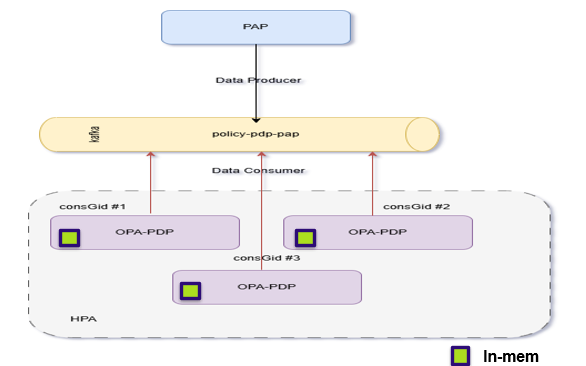
OPA-PDP achieves policy scalability and consistency using Kafka-based synchronization: - Each OPA-PDP pod subscribes to the Kafka topic
policy-pdp-papusing a unique consumer group ID. - This ensures that every pod receives all policy messages independently. - Policy data remains synchronized and consistent across all OPA-PDP replicas. - This architecture supports horizontal scaling using Kubernetes Horizontal Pod Autoscaler (HPA).
The Policy Administration Point (PAP) publishes policy updates to the Kafka topic
policy-pdp-pap.Multiple OPA-PDP pods, each with a unique Kafka consumer group ID, subscribe to this topic.
Each pod receives and processes the full stream of policy updates independently.
OPA-PDP Dynamic Data Scalability
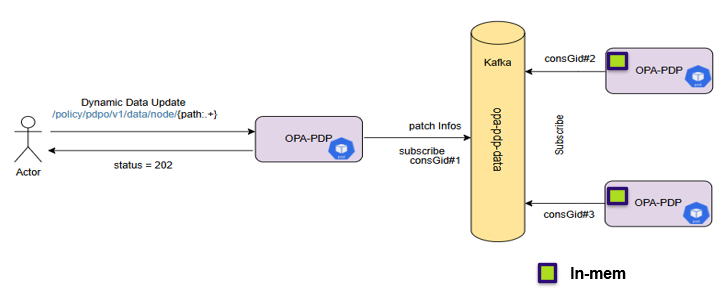
OPA-PDP supports dynamic data updates via REST API and Kafka-based synchronization: - The REST API allows dynamic data updates at endpoint
/policy/pdp0/v1/data/node/{path:.+}. - Depending on the Helm chart configuration parameteruseKafkaForPatch:
If enabled, the pod: - Forwards the patch to Kafka topic
opa-pdp-data. - Responds with HTTP status 202. - All OPA-PDP pods (with unique consumer group IDs) receive and apply the update.If disabled, the pod: - Applies the update only locally. - Responds with HTTP status 204.
An actor sends a PATCH request to an OPA-PDP pod.
If Kafka sync is enabled, the pod forwards the patch to Kafka topic
opa-pdp-data.All OPA-PDP pods subscribed to this topic (e.g., with consumer group IDs
consGid#2,consGid#3) receive and apply the update independently.This mechanism ensures eventual consistency of dynamic data across all replicas when synchronization is enabled.